
Quick Korean Bibimbap (Korean Rice Bowl)
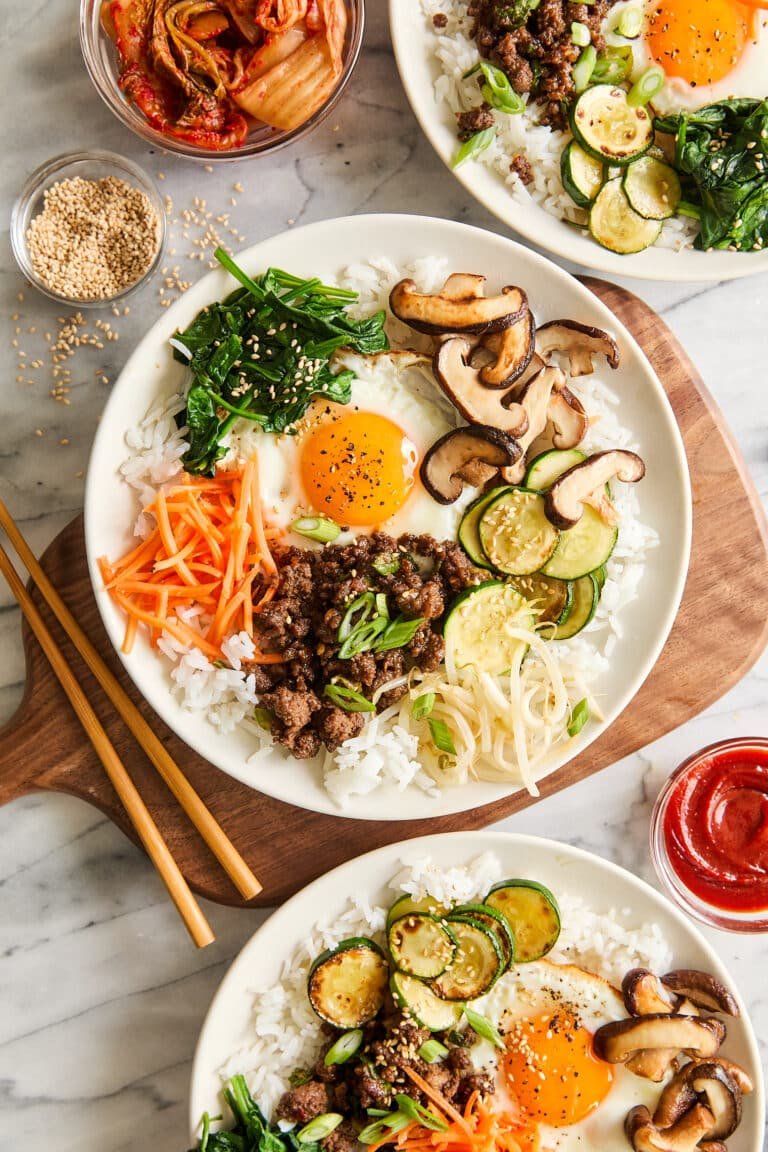
Quick Korean Bibimbap (Korean Rice Bowl) Meal Prep Recipe
This Quick Korean Bibimbap recipe is perfect for meal prepping, allowing you to enjoy delicious, customizable Korean rice bowls throughout the week. With some batch cooking and smart storage techniques, you can streamline your kitchen time while savoring this vibrant dish!
Meal Prep Overview
Time-Saving Tips:
- Batch Cook Rice: Cook a large batch of rice at the beginning of the week. Store it in individual containers or plastic bags to easily grab portions as needed.
- Pre-cook Vegetables: Prepare and sauté the vegetables in advance. Store them in airtight containers in the fridge for up to 3 days.
- Cook Protein in Bulk: If using meat, cook it all at once and portion it out for several meals, reheating as needed.
Storage Options:
- Containers: Use glass or BPA-free plastic containers with compartments to separate rice, protein, and veggies. This keeps everything fresh and prevents sogginess.
- Labeling: Clearly label containers with the date and contents to ensure you use them within the recommended timeframe.
Assembly Tips:
- Pack Separately: For meals that will be eaten during the week, pack rice, veggies, and protein in individual compartments. This way, you can simply heat each component and enjoy!
- Sauces on the Side: Keep gochujang and sesame oil in small containers on the side to drizzle just before eating, enhancing flavor without compromising texture.
Ingredients:
For the Bibimbap:
- Rice: Cooked short-grain white rice (or your preferred grain)
- Protein: Korean bulgogi, ground beef, chicken, or tofu
- Vegetables (choose any combination):
- Zucchini, halved and thinly sliced
- Carrots, cut into matchsticks
- Spinach
- Mung bean sprouts
- Shiitake mushrooms, sliced
- Toppings:
- Fried eggs
- Kimchi
- Gochujang
- Toasted sesame oil
- Toasted sesame seeds
Prepping Your Quick Korean Bibimbap
Step-by-Step Process:
-
Cook Rice: Start by cooking a large batch of your favorite rice. Once cool, divide into portions for easy access.
-
Prepare Vegetables:
- Heat a splash of oil in a skillet and sauté each vegetable separately (zucchini, carrots, spinach, bean sprouts, and mushrooms) until just tender, seasoning lightly with salt and pepper.
- Cool completely before placing in storage containers.
-
Cook Protein:
- If using bulgogi or any other protein, cook in bulk as well. Allow to cool before portioning into containers.
-
Storage:
- Store rice, protein, and vegetables separately in airtight containers. Keep eggs uncooked in a separate container and add fresh when assembling your bowls.
- Assembly:
- When ready to eat, layer cooked rice at the bottom of your bowl, followed by your protein, veggies, and a fried egg on top.
- Drizzle with gochujang and sesame oil, sprinkle sesame seeds, and mix well before eating!
Pro Tips:
- Maximize Freshness: Using quality containers will keep your ingredients fresh longer. Avoid overcooking vegetables to maintain their texture.
- Customize: Feel free to switch up the veggies based on seasonal availability or personal preference; this makes bibimbap a versatile and fun meal option.
Conclusion
With these tips, your Quick Korean Bibimbap can seamlessly fit into your weekly meal prep routine. Enjoy the flavors of Korea while benefiting from the convenience of prepped meals!